

Frozen Shoulder Treatment in Perth
Frozen shoulder (adhesive capsulitis) requires a very different treatment approach to most other shoulder conditions. The most important factor in successful management is matching treatment to the stage of the condition.
Aggressive stretching, forcing movement, or applying the same approach to every stage can significantly worsen symptoms — particularly in the early, pain-dominant phase.
This page explains how frozen shoulder is treated, what works best at each stage, and what to expect from physiotherapy-led care.
We’ve treated hundreds of frozen shoulders, and the story is often the same:
- Months of unexplained pain
- Significantly limited movement
- Conflicting information from doctors, health professionals and friends
- Unsuccessful treatment that didn’t match the stage of the condition
Correct diagnosis and stage-appropriate frozen shoulder treatment makes all the difference. And that’s exactly what we deliver.
How Is Frozen Shoulder Treated?

Frozen shoulder treatment focuses on three key principles:
- Reducing pain and inflammation when pain is dominant
- Maintaining and gradually restoring strength and mobility as stiffness becomes the main issue
- Supporting natural recovery without aggravating the condition
While frozen shoulder almost always improves with time, appropriate treatment can reduce pain, improve function, and make the recovery process more manageable.
Why Treatment Must Be Stage-Specific
Frozen shoulder progresses through stages that behave very differently. Treatment that is helpful in one stage can be ineffective — or harmful — in another.
Broadly:
- Early stages require pain control and protection
- Later stages benefit from gentle, progressive movement and strengthening
- Pushing too hard too early often leads to flare-ups and delayed recovery
Accurately identifying your stage is a critical first step.
Treatment in the Freezing (Pain-Dominant) Stage
The freezing stage is characterised by increasing pain, often worse at night, with gradually reducing movement.
Treatment goals:
- Settle pain and inflammation
- Reduce night pain and flare-ups
- Protect the shoulder from unnecessary irritation
Treatment may include:
- Education and activity modification
- Gentle, comfortable movement only
- Pain-relieving manual therapy where appropriate
- Advice around sleep positioning and daily tasks
- Corticosteroid injection in selected cases
Aggressive stretching or forcing movement is not recommended in this stage, as it commonly worsens pain and prolongs symptoms.
Treatment in the Frozen (Stiffness-Dominant) Stage
As pain begins to settle, stiffness becomes the main limitation. Daily tasks remain difficult, but pain is often less intense.
Treatment goals:
- Improve strength
- Gradually improve shoulder movement and prevent further stiffness
- Maintain comfort and confidence with movement
Treatment may include:
- Progressive strengthening exercises
- Controlled mobility exercises
- Manual therapy techniques where appropriate
- Ongoing education to guide safe progression
Progress is usually slow and gradual in this stage. Small improvements over time are expected and normal.
Treatment in the Thawing (Recovery) Stage
During the thawing stage, shoulder movement slowly begins to return and pain continues to ease.
Treatment goals:
- Restore functional movement
- Rebuild strength and control
- Address compensatory movement patterns
Treatment may include:
- Progressive mobility exercises and light stretching
- Functional strengthening exercises tailored to daily and work demands
- Gradual return to higher-level activities
This stage is about guiding recovery, not rushing it. Overloading too quickly can still trigger setbacks.
What to Expect From Physiotherapy Treatment
At your initial appointment, we focus on clarity and reassurance.
Assessment typically includes:
- A detailed history and symptom review
- Identification of your current stage
- Screening for other possible causes of shoulder pain
- Clear explanation of what is happening in your shoulder
- A personalised treatment plan aligned with your stage
Many people find that understanding the condition and having a clear plan reduces anxiety and improves confidence early on.
Will Treatment Speed Up Recovery?
Appropriate frozen shoulder treatment can:
- Reduce pain and night discomfort
- Minimise flare-ups
- Accelerate the natural recovery time of frozen shoulder
- Improve function during recovery
While timelines vary, stage-appropriate treatment helps people cope better and recover more smoothly.
Do Cortisone Injections Help Frozen Shoulder?
Corticosteroid injections can be extremely effective when performed early and in the correct location — the glenohumeral joint (GHJ).
We work closely with skilled GPs and specialists who perform image-guided GHJ injections, which is the most effective approach for pain reduction and inflammation control in frozen shoulder.
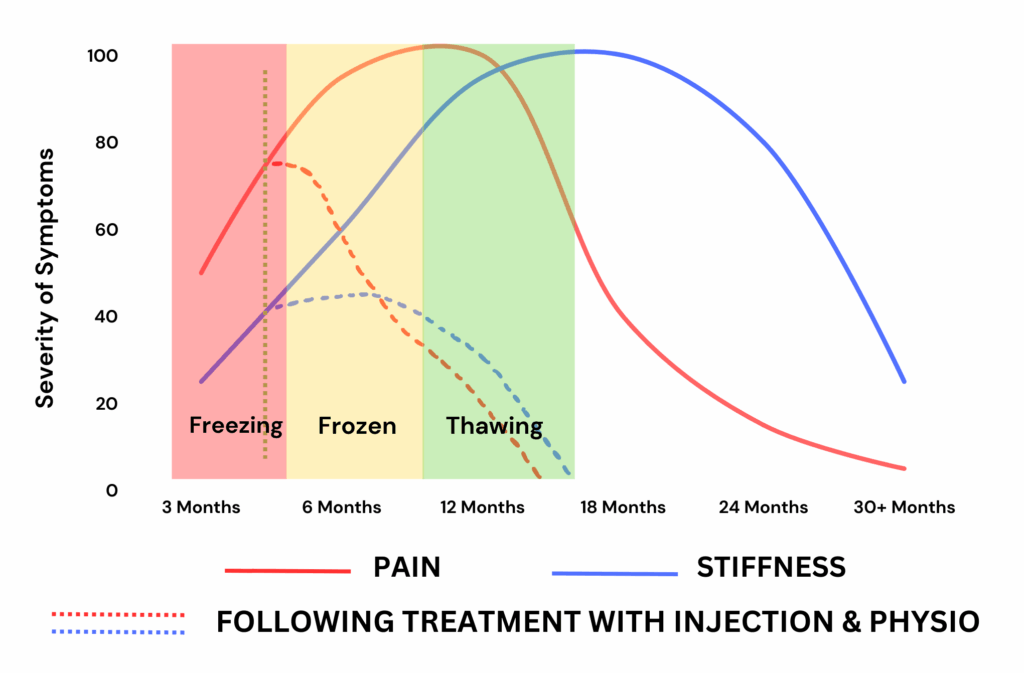
An injection may be recommended if you are:
- In the painful “freezing” stage
- Experiencing sleep disturbance
- Unable to tolerate basic exercises
- Significantly limited in daily activities
We will guide you through whether this option is right for you in the clinic or you can find more information on our frozen shoulder injections page.
Frozen Shoulder Self-Care Guide
Your step-by-step roadmap for managing frozen shoulder at home
If you want a deeper understanding of frozen shoulder and clear guidance on what to do at each stage, you may find our Frozen Shoulder Treatment Guide extremely helpful.

This comprehensive resource includes:
- Stage-specific exercises
- Pain management strategies
- Daily movement recommendations
- Sleep tips
- Red flags and when to seek help
- A full recovery roadmap
- Clear explanations written in plain English
It’s designed to remove confusion and give you confidence between appointments — or if you’re managing your condition independently.
Find the free sample (“Frozen Shoulder at a Glance”) and the full guide here.
When Should You Seek Treatment?
You should consider assessment if:
- Shoulder pain and stiffness persist beyond several weeks
- Night pain is severe or worsening
- Daily activities are becoming increasingly limited
- You are unsure whether your symptoms are frozen shoulder or another condition
Early, accurate guidance often prevents unnecessary frustration and setbacks.
Expert Frozen Shoulder Treatment in Perth
At Perth Shoulder Physio, frozen shoulder is a condition we assess and treat regularly. Our approach is based on:
- Accurate stage identification
- Evidence-based treatment strategies
- Clear education and expectation setting
- Individualised rehabilitation plans
Book an Appointment
Because frozen shoulder behaves differently at each stage, having the wrong exercises or progressing too early can significantly delay recovery.
If you’d like personalised guidance, you can book an appointment now.
For an independent medical overview of frozen shoulder and its management, you may find this resource helpful: Frozen shoulder – Healthdirect