

What is Frozen Shoulder (Adhesive Capsulitis)?
Frozen shoulder — officially known as adhesive capsulitis — is a condition where the shoulder joint becomes increasingly painful and stiff over time. It is caused by inflammation and tightening of the capsule surrounding the shoulder, leading to a progressive loss of movement.
Although it can feel severe and long-lasting, frozen shoulder is completely treatable with the right diagnosis and stage-specific management.
This page explains what frozen shoulder is, how it develops, who it affects, and why it behaves so differently from other shoulder conditions.
For personalised assessment and treatment, book an appointment at Perth Shoulder Physio — frozen shoulder is one of our core areas of expertise.
What Happens Inside the Shoulder?

Your shoulder joint is surrounded by a flexible capsule — like a thin, elastic balloon or sleeve that allows the arm to move freely in all directions.
In frozen shoulder:
- the capsule becomes inflamed,
- then gradually becomes thicker and tighter,
- eventually creating a feeling of the shoulder being “stuck” or “frozen.”
This irritation of the capsule is responsible for the two main features of frozen shoulder:
- Pain (often severe)
- Progressive stiffness and restricted movement
These changes do not happen overnight. They progress gradually, which is why many people initially mistake frozen shoulder for a simple strain or bursitis.
Why Does Frozen Shoulder Occur?
The exact cause is not always clear. However, there are several well-established factors that increase the likelihood of developing frozen shoulder.
Common Risk Factors
- Recent shoulder injury or surgery (secondary frozen shoulder)
- Diabetes (Type 1 or Type 2)
- Thyroid disorders
- Prolonged immobility of the arm
- Age between 40–65
- More common in females
- More common in the non-dominant arm
Many patients we see fall into one of these categories — but frozen shoulder can still occur in people with no obvious cause, which often adds to the confusion and stress surrounding the condition.
Frozen Shoulder Is Often Misdiagnosed
Frozen shoulder shares symptoms with several other shoulder problems, including:
- bursitis
- rotator cuff tears
- impingement
- tendinopathy
Because early frozen shoulder can feel like “standard shoulder pain,” many people are incorrectly treated with generic strengthening or aggressive stretching — which often worsens their symptoms.
Accurate diagnosis is essential because frozen shoulder requires a very specific, stage-dependent approach.
Key Symptoms of Frozen Shoulder
Although symptoms vary, most people experience:
Pain
- Often deep, aching, and difficult to pinpoint
- Worse when lying on the affected side
- Commonly disturbs sleep
- Can be severe in the early stage
Stiffness
- Difficulty lifting the arm
- Trouble reaching behind your back (bra strap, wallet)
- Reduced ability to reach overhead (cupboard, hair washing)
- “Blocked” or “stuck” feeling
Gradual Loss of Movement
The hallmark of frozen shoulder is that movement becomes restricted in all directions, not just one.
Read our complete frozen shoulder symptom breakdown.
The Three Stages of Frozen Shoulder
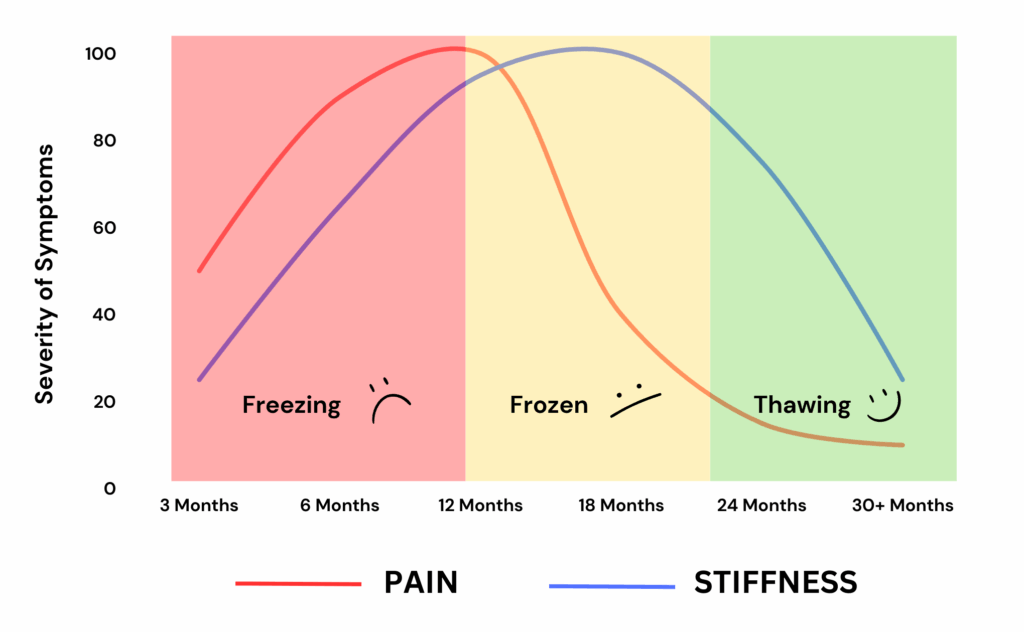
Frozen shoulder progresses through distinct phases. Each stage behaves differently and responds to different types of treatment.
1. Freezing Stage (Pain-Dominant)
- Increasing pain
- Movement becomes painful and limited
- Sleep often affected
- The shoulder becomes more irritable and inflamed
2. Frozen Stage (Stiffness-Dominant)
- Pain may begin to settle
- Stiffness becomes the main issue
- Range of motion is significantly reduced
3. Thawing Stage (Recovery)
- Movement gradually returns
- Pain continues to settle
- Function improves month by month
Learn more about each frozen shoulder stage here.
How Is Frozen Shoulder Diagnosed?

An accurate diagnosis does not rely on scans alone.
Frozen shoulder is diagnosed clinically through:
- your history
- your pattern of stiffness
- the “end-feel” of the joint
- the direction and degree of motion loss
Scans such as X-ray or ultrasound are sometimes used to exclude other conditions but are not typically helpful in confirming frozen shoulder.
If your shoulder stiffness and pain follow the classic pattern described above, a physiotherapist experienced in frozen shoulder can diagnose it confidently.
How Long Does Frozen Shoulder Last?
Frozen shoulder is commonly described as lasting 12–36 months, but this varies significantly.
Factors that influence recovery include:
- how early it is diagnosed
- whether treatment matches your stage
- whether an injection is suitable
- presence of diabetes or thyroid issues
- the irritability of the shoulder
Correct management can relieve pain earlier and restore movement sooner.
See the full frozen shoulder recovery timeline.
Is Frozen Shoulder Dangerous?
No — frozen shoulder is not dangerous, and the shoulder joint itself remains healthy. It does not cause arthritis, and it does not damage the joint surfaces.
However, without proper guidance, it can be:
- extremely painful
- very limiting
- much slower to resolve
The biggest risks come from misdiagnosis or incorrect exercises that irritate the capsule.
What Should You Do Next?

Understanding frozen shoulder is the first step. The next step is making sure you’re treating the right stage with the right approach.
See frozen shoulder treatment options here.
Download our free quick guide on frozen shoulder or explore the complete Frozen Shoulder Treatment Guide.
Need a Diagnosis?
If you’re unsure whether you have frozen shoulder or another condition that looks similar, we can help.
Further reading on adhesive capsulitis (Health Direct).